
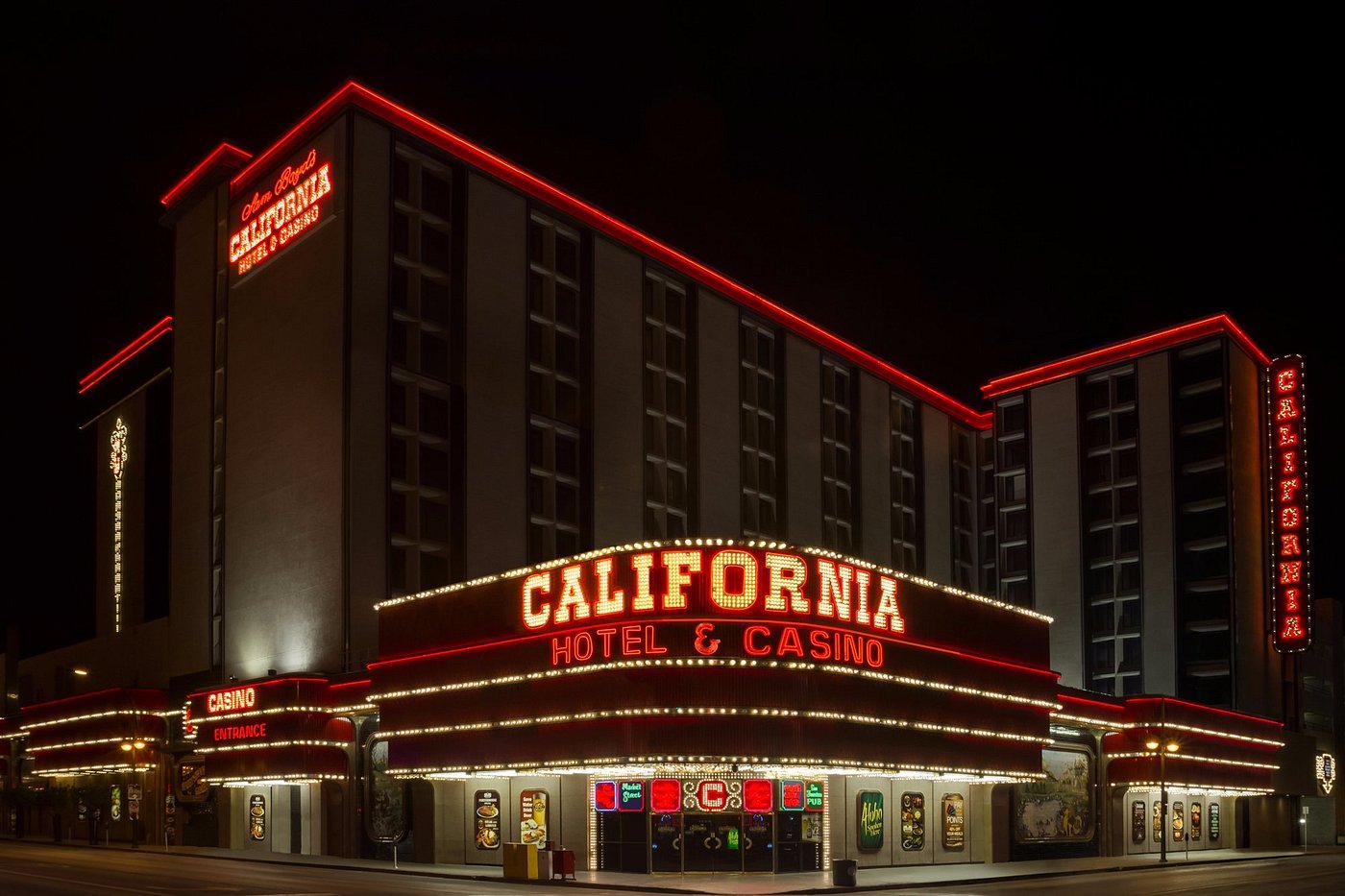
The California Hotel became “the Hawaiʻi hotel” in Las Vegas
By the time you’ve heard somebody say, “Let’s stay at The Cal,” you already know the code. They’re not talking about a random downtown spot with a state name slapped on the sign. They mean that place—the one that feels like you landed in Las Vegas but somehow still catching island vibes in the lobby.
So how did the California Hotel—named after California—end up being known as the “Hawaiʻi hotel”?
It happened because the hotel didn’t just welcome Hawaiʻi visitors… it was re-built (in spirit and in strategy) around them.


It started as a California idea… then it pivoted hard to Hawaiʻi
The California Hotel & Casino opened on January 1, 1975 as a downtown property aimed at the Southern California market—kind of a “come drive in” concept for folks from the mainland West Coast.
But here’s the thing: downtown Las Vegas wasn’t automatically the first choice for road-trippers. If you’re driving in, you pass a whole parade of casinos before you ever reach downtown. Early business was slow, and the owners had to make a real decision: keep chasing the original plan, or switch lanes.
That switch is the beginning of the “Hawaiʻi hotel” story.
The Boyd connection: knowing Hawaiʻi, understanding Hawaiʻi
The hotel was developed by a group led by Sam Boyd, and it later became part of the company that is now Boyd Gaming.
One reason the pivot worked is simple: the Boyd family had personal ties to Hawaiʻi, and they understood something a lot of Vegas operators didn’t fully recognize yet—people from Hawaiʻi already loved coming Vegas. The demand was real. The question was: who was going to treat that audience like family instead of “just tourists”?


According to reporting on how Vegas became the “Ninth Island,” Boyd began intentionally marketing to visitors from the islands—working with airlines, offering aggressive deals, and even using freebies (meals, rooms) to build loyalty.
That’s not an accident. That’s a strategy: “If Hawaiʻi is going to come anyway, let’s be the place they choose every time.”
Packages + charter flights made it easy for Hawaiʻi to claim a home base
When people talk about The Cal being the Hawaiʻi hotel, they’re also talking about the travel pipeline that made it super normal for aunties, uncles, couples, and whole families to roll to Vegas together—like one organized holoholo.
For years, Boyd’s Hawaiʻi travel partner built package deals and nonstop charter service aimed straight at island travelers, bundling air + hotel in a way that felt made for local life: simple, affordable, and group-friendly.
That matters because convenience creates tradition. If your first Vegas trip is smooth, your second trip becomes a habit. Then your cousins go. Then your co-workers go. Then it turns into “every year, same time, same hotel.”
That’s how a hotel becomes a gathering place—not just a building.


“Aloha lives here” wasn’t a slogan… it became the operating system
The California Hotel didn’t become “the Hawaiʻi hotel” just because Hawaiʻi visitors stayed there. It became that because the property leaned into Hawaiʻi as a culture—through staff, tone, and details that tell you, “Yeah, you belong here.”
Even the hotel’s own branding pushes the idea that it’s bringing “the hospitality of the Hawaiian Islands” into downtown Vegas.
And it’s not only marketing language. University of Nevada, Las Vegas has written about how the place evolved into a “Hawaiian home away from home,” noting island-themed décor, Hawaiian-language room names, and multiple eateries serving Hawaiʻi favorites—even while the exterior still carries California-themed historical murals.
That contrast is actually the best explanation: outside says “California,” inside says “Hawaiʻi.”


The food is the real proof: you can’t fake “taste of home”
If you’ve ever heard someone say, “Eh, we going The Cal—for the food,” you already understand.
Food is memory. Food is comfort. Food is what makes you stop missing home for a minute.
The California Hotel is famous for serving dishes that hit the Hawaiʻi palate, not just generic casino buffet stuff. One of the most talked-about is the oxtail soup at Market Street Cafe—so iconic the hotel promotes it like a signature must-try.
That kind of menu choice is cultural. It signals: “We know what you like. We know what you grew up eating. We’re not making you ‘adapt’ to Vegas—Vegas is adapting to you.”
That’s why visitors from Hawaiʻi don’t just stay there. They claim it.
The Cal helped build the “Ninth Island” feeling—before it was even a brand
Today, “Ninth Island” is a whole identity: Hawaiʻi people in Vegas, Hawaiʻi businesses in Vegas, Hawaiʻi events in Vegas, and a constant back-and-forth between the islands and the desert.
But a lot of that cultural bridge got reinforced by the California Hotel’s decision to focus on Hawaiʻi travelers early and consistently. Even major long-form storytelling about the Hawaiʻi–Vegas relationship points to The Cal as a key hub—where travel deals, familiar food, and repeat visits helped deepen the connection over decades.
And it’s still recognized today: as the hotel hit its 50-year mark, Nevada media highlighted how it grew into a favorite for Hawaiian visitors and became foundational to that whole Hawaiʻi-to-Vegas relationship.
So when someone calls it “the Hawaiʻi hotel,” they’re really saying:
This is the one!


📲 Where To Follow + Plan Your Stay
California Hotel & Casino (The Cal)
🌐 Official Website: thecal.boydgaming.com
🛏️ Book Your Stay: thecal.boydgaming.com/stay
🍽️ Dining: thecal.boydgaming.com/dine
🎉 Entertainment Calendar: thecal.boydgaming.com/entertain/entertainment-calendar
📸 Instagram: @thecalcasino
📘 Facebook: California Hotel & Casino – Las Vegas
𝕏 X / Twitter: @thecalcasino
Must-Know Cal Links
🥣 Oxtail Soup: Market Street Cafe Oxtail Soup
🍴 Aloha Specialties: Aloha Specialties
🥩 Redwood Steakhouse: Redwood Steakhouse
🍜 California Noodle House: California Noodle House
🎰 Boyd Rewards: Join Boyd Rewards